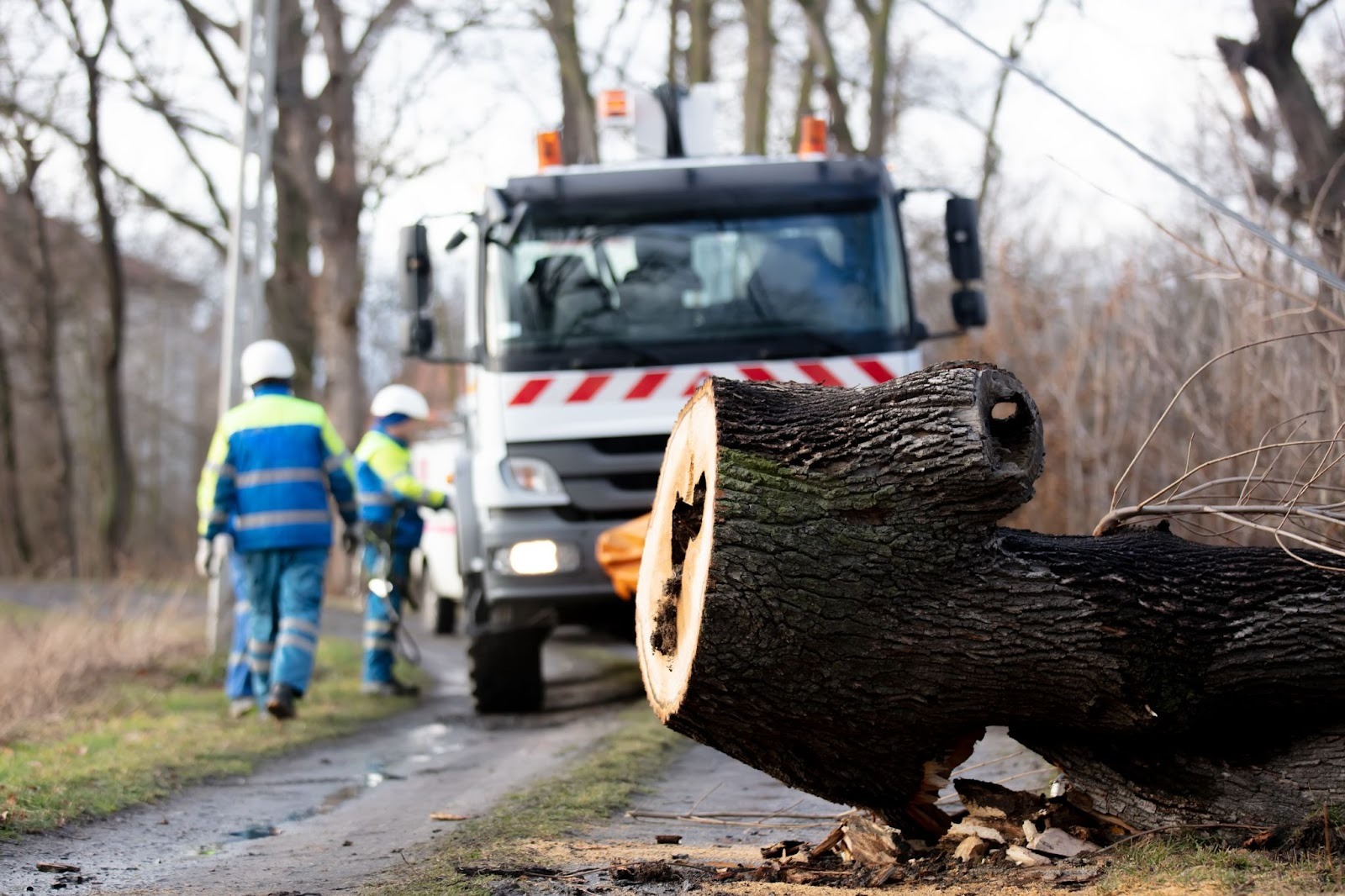
Emergencies involving damaged or fallen trees unfold quickly and leave little room for error. High winds, weakened soil, and hidden decay often combine to create sudden hazards around homes and businesses. Property owners typically must make quick decisions without knowing how quickly conditions can change. Professional crews respond by identifying risks before taking action, even when pressure mounts from surrounding damage. This disciplined approach defines how experienced teams handle emergency tree removal.
Safety Risks Involved in Emergency Tree Removal
Emergency tree removal involves elevated hazards due to instability, limited visibility, and surrounding exposure. These conditions demand rapid decisions grounded in experience rather than assumption. Professionals treat every site as unpredictable, even when damage appears straightforward. This approach allows crews to anticipate movement, environmental shifts, and secondary risks before cutting begins.
Tree Instability and Load Imbalance
Emergency tree removal often involves trees that no longer distribute weight evenly. Cracked trunks, split limbs, or compromised roots change how force travels through the tree. Professionals read these load shifts before making any cuts. This evaluation helps predict how wood will move once the tension is released. A single misjudged cut can redirect force unexpectedly. Experienced crews adjust continuously as conditions evolve.
Structural and Spatial Constraints
Emergency tree removal is often needed near homes, fences, and commercial buildings. Limited space restricts where wood can fall safely. Professionals respond by dismantling trees in controlled sections rather than allowing them to fall fully. This method reduces lateral movement and impact force. Each section follows a planned descent path. Precision replaces speed in confined environments.
Public Access and Traffic Exposure
Emergency tree removal sites often overlap with roads or walkways. Passing vehicles and pedestrians increase the risk without warning. Professionals establish controlled perimeters before starting work. This practice protects both workers and the public. Visual barriers and clear signage support awareness. Safety remains active beyond the work zone itself.
How Experts Approach Safety in Urgent Tree Removal
Safety becomes the priority when unstable trees threaten people, property, and surrounding infrastructure. Professionals rely on training, experience, and situational awareness to manage risks that change by the minute. Each decision reflects an understanding of how quickly conditions can worsen during severe weather or structural failure. These safety-driven practices explain why professional emergency response differs sharply from routine tree work.
Assess Risks Before Any Cutting Starts
Professional assessment determines how emergency operations proceed safely. Crews evaluate physical, environmental, and structural factors under time pressure. These observations guide equipment choice and cutting strategy. This preparation reduces the risk of unpredictable outcomes once cutting begins.
Identify Lean and Force Direction
Emergencies require understanding how gravity and tension interact within damaged trees. Professionals study lean angle, limb weight, and trunk integrity before acting. This evaluation identifies compression and tension zones that influence cutting order. Cutting into the wrong zone can trigger sudden movement. Crews select cut points that release force gradually. Directional awareness supports controlled outcomes.
Examine Soil and Root Stability
Root failure frequently triggers emergency responses. Saturated or shifting soil weakens anchoring strength at depth. Professionals inspect for ground heaving, exposed roots, and soil cracking. These signs indicate potential collapse zones. Equipment placement adapts to ground stability. This evaluation limits unexpected movement during cutting.
Account for Weather and Terrain Conditions
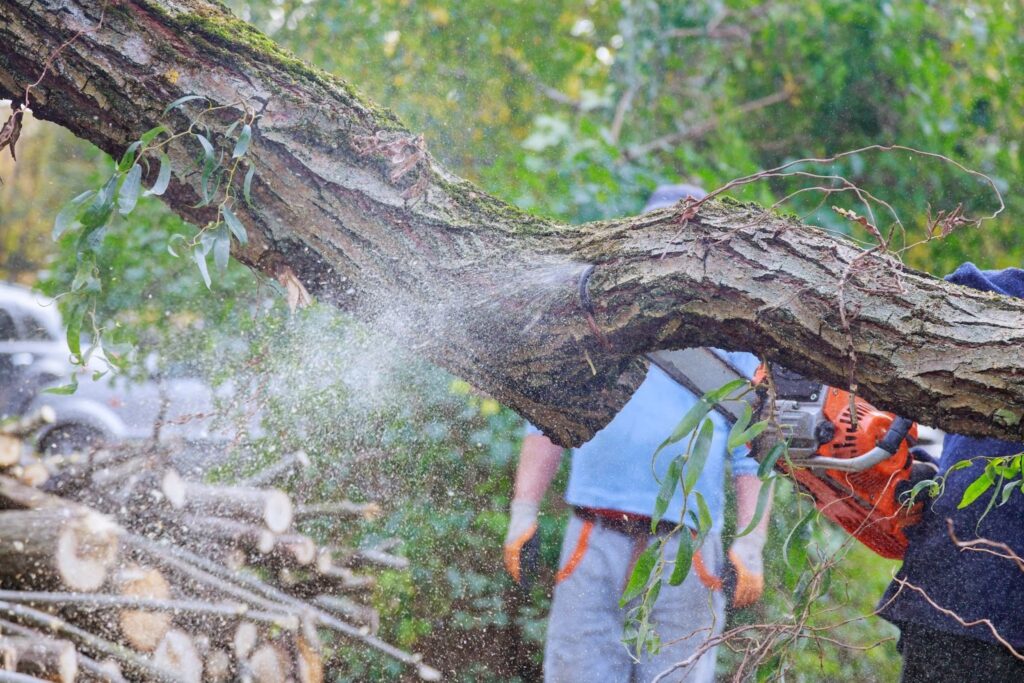
Weather directly affects operational safety during urgent situations. Wind alters fall paths and balance. Rain increases slip risk and weakens soil integrity. Professionals adjust timing and technique based on current conditions. Work pauses if hazards escalate beyond control. Environmental awareness guides every decision.
Use Safety Gear for High-Risk Conditions
Protective equipment forms the foundation of professional emergency operations. High-risk environments demand gear designed for impact, cutting exposure, and falls. Professionals rely on equipment standards informed by field experience and industry data. This protection reduces injury severity when conditions shift unexpectedly.
Protect Head, Eyes, and Hearing
Falling debris and loud machinery increase the risk of injury during emergency work. Helmets shield against overhead impact. Eye protection prevents injury from wood chips and dust. Hearing protection reduces long-term strain. Professionals wear full protective gear regardless of task duration. Consistent use prevents avoidable injuries.
Wear Clothing That Improves Control
Cut-resistant clothing helps prevent injury from accidental contact. Gloves improve grip in wet or unstable conditions. Boots provide traction on uneven ground and protect the toes from dropped tools. Proper fit improves balance and mobility. Apparel supports precision under pressure.
Secure Harnesses to Reduce Fall Risk
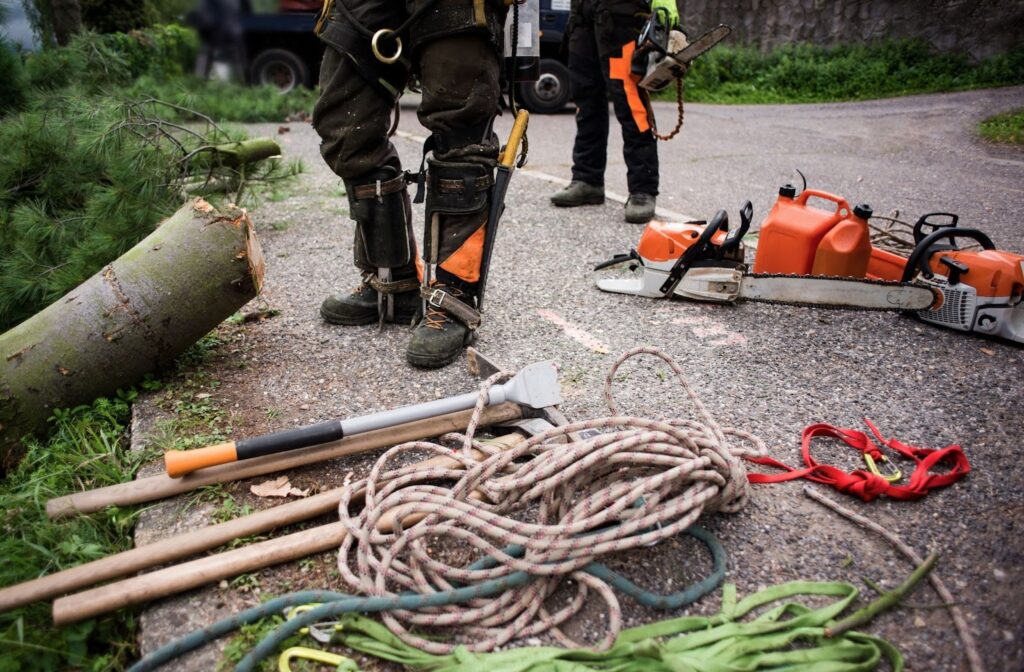
Climbing during emergency operations increases the risk of falls. Harness systems distribute weight and limit drop distance. Ropes and anchors undergo inspection before use. Professionals adjust systems as structures change. Fall protection remains active throughout the task. This discipline reduces serious injury risk.
Control Cuts in Unstable Environments
A cutting strategy determines safety outcomes in emergency conditions. Professionals avoid uncontrolled drops whenever possible. They rely on calculated cuts supported by rigging systems. Controlled execution protects people and property.
Dismantle Sections to Prevent Free Falls
Large structures are dismantled piece by piece during emergencies. Smaller sections reduce impact force. Rigging systems guide material safely downward. Coordination between climbers and ground crews remains constant. Each section follows a planned route. Predictability improves safety.
Direct Cuts to Manage Internal Tension
Directional cutting guides movement deliberately. Professionals assess fiber tension before engaging the equipment. Incorrect angles increase splitting risk. Adjustments occur when tension shifts mid-process—controlled release limits sudden swings. Experience informs every cut.
Reduce Kickback and Tool Recoil
Kickback causes many cutting-related injuries. Professionals maintain a stable stance and proper grip. Bar positioning reduces reactive forces. Equipment maintenance lowers malfunction risk. Crews pause when visibility drops. Patience improves control.
Coordinate Crews During Emergency Operations
Team coordination supports safe outcomes in urgent conditions. Defined roles reduce confusion when pressure rises. Clear communication prevents overlap and error. Structure allows crews to respond efficiently.
Assign Roles to Prevent On-Site Confusion
Each crew member holds a specific function. Climbers manage cutting and rigging. Ground crews handle ropes and debris. Supervisors monitor conditions continuously. Defined roles reduce hesitation. Accountability improves coordination.
Maintain Clear Communication in Noise
Noise complicates verbal communication during operations. Professionals rely on hand signals and radios. Commands remain standardized and concise. Confirmation follows each instruction. Silence signals danger or pause. Communication stays deliberate.
Follow Legal and Ethical Safety Responsibilities
Emergency conditions do not remove professional responsibility. Legal and ethical standards guide every safety decision. Professionals balance urgency with accountability. These obligations protect workers, clients, and the public.
Comply With Local Safety and Utility Regulations
Emergency operations often intersect with local ordinances. Utility coordination becomes critical near power lines or underground services. Professionals follow regional safety codes even under pressure. Documentation supports compliance and accountability. Crews avoid shortcuts that increase liability. Regulation awareness shapes decision-making.
Protect Public Safety Beyond the Work Zone
Ethical responsibility extends beyond the immediate site. Professionals secure areas that affect pedestrians and traffic. Temporary closures reduce exposure to falling debris. Warning signage communicates risk clearly. Crews monitor surroundings throughout operations. Public protection remains active at all times.
Refuse Unsafe Requests Despite Urgency
Property owners sometimes request faster results at higher risk. Professionals evaluate feasibility before agreeing. Refusing unsafe actions protects everyone involved. Ethical judgment outweighs convenience. This discipline prevents preventable injuries. Safety integrity defines professional standards.
Protect Property During Hazard Response
Property protection remains central during urgent operations. Professionals balance urgency with precision. Planning reduces secondary damage. Controlled methods protect surrounding assets.
Establish Drop Zones to Limit Damage
Drop zones identify areas clear of structures. Crews maintain these zones throughout work. Barriers prevent accidental entry. Adjustments occur as conditions change. Limited space requires careful planning. Safety dictates placement.
Shield Structures and Utilities Nearby
Professionals redirect debris away from buildings. Padding and rigging protect exposed surfaces. Underground utilities are given due consideration during equipment placement. Weight distribution affects buried lines. Awareness reduces service disruption. Protection guides strategy.
Stabilize the Site After Hazard Removal
Safety responsibilities continue after immediate hazards are removed. Remaining risks require inspection and cleanup. Professionals restore order to reduce future exposure. Follow-through supports long-term safety.
Inspect Nearby Trees for Hidden Damage
Adjacent structures may sustain unseen stress. Broken limbs alter balance. Professionals inspect for cracks and suspended debris. Secondary removals prevent delayed failures. Storms often affect clusters. Inspection reduces future hazards.
Clear Debris and Restore Ground Safety
Debris creates trip hazards if left unmanaged. Professionals remove materials promptly. Soil compaction receives attention after equipment use. Stump treatment limits regrowth concerns. Cleanup completes the safety process. Stability replaces disorder.
Address Hidden Hazards After Emergency Work
Emergency work does not eliminate all risks once visible damage is cleared. Secondary hazards often remain unnoticed without professional evaluation. These risks can surface hours or days later, creating renewed danger. Professionals treat post-removal conditions as part of the same safety process.
Detect Underground and Structural Instability
Emergency tree removal can expose weakened soil and underground voids. Heavy root systems often displace earth during failure. Professionals examine depressions, cracks, and soft ground after removal. These conditions may threaten foundations or walkways. Crews address instability before equipment leaves the site. This follow-up reduces delayed damage.
Identify Stress in Nearby Vegetation
Surrounding trees often absorb much of the force during a collapse. This stress weakens limbs and root systems without obvious signs. Professionals inspect adjacent trees for fractures and any balance changes. Hanging limbs and shifted canopies increase the risk of future failure. Preventive trimming or removal may follow. This step protects long-term site safety.
Manage Debris That Creates Ongoing Risk
Remaining debris poses hazards beyond visual clutter: wood fragments and uneven ground increase the risk of slips. Professionals remove materials methodically rather than quickly. Equipment tracks receive attention to restore footing. Clean sites reduce liability exposure. Order replaces emergency disruption.
Rely on Experts for Emergency Tree Removal
When unstable trees threaten safety, experience guides decisions that others cannot safely make. Professional tree services recognize hidden risks, coordinate responses, and adjust quickly as conditions change. This expertise reduces uncertainty in situations where mistakes carry real consequences. Relying on qualified specialists for emergency tree removal helps protect people, property, and the surrounding environment when decisive action is required.
Visit the EML Tree Services blog to learn how professional judgment, safety standards, and field experience guide every emergency response.