
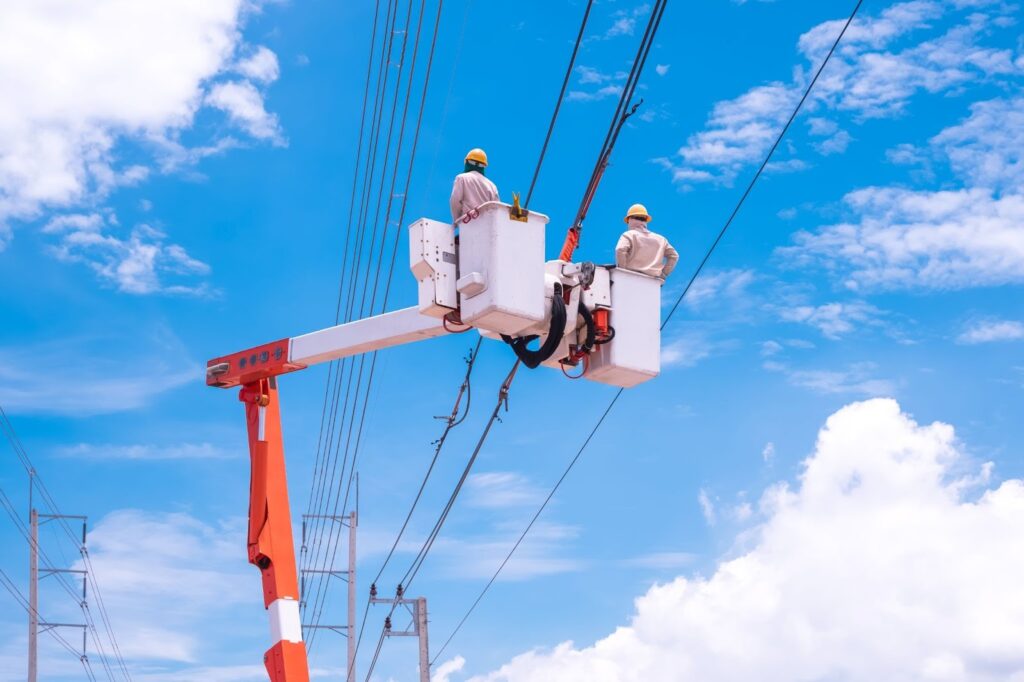
A bucket truck appears across cities, job sites, and neighborhoods almost daily. These vehicles support work performed above ground where ladders and scaffolding create limitations. Crews rely on elevated platforms to complete tasks with greater control and reduced risk. Many industries treat bucket trucks as standard equipment because they support efficiency, safety, and consistent access. Understanding how a bucket truck functions clarifies why it remains indispensable across modern worksites.
What a Bucket Truck is and How it Functions
A bucket truck is a commercial vehicle equipped with a hydraulic boom and an elevated work platform. This configuration allows workers to reach vertical and horizontal heights safely from a stable base. Operators control movement from inside the bucket or from ground stations. The vehicle combines mobility, reach, and stability into a single access solution.
Structural Design of a Bucket Truck
The vehicle frame supports both road travel and lifting operations. Manufacturers reinforce the chassis to ensure it can safely withstand vertical loads. The boom mounts securely to the truck body to prevent torsion. This structure maintains balance during elevation. Reinforcement reduces wear during repeated lifts. Structural integrity supports long-term use.
Key Components That Define a Bucket Truck
The truck chassis provides mobility and supports the lifting system. A hydraulic boom extends upward and outward under pressure. At the boom’s end, the bucket holds workers and equipment securely. Controls inside the bucket manage precise positioning. Outriggers stabilize the vehicle during operation. Each component supports controlled movement.
How Hydraulic Systems Control Lift and Reach
Hydraulic systems power the boom through regulated pressure. Valves control the flow rate to prevent sudden shifts. Operators adjust position smoothly near structures. This control supports work in confined spaces. Emergency lowering activates during power loss. Reliability remains consistent across job conditions.
Stability Systems That Support Elevated Work
Outriggers distribute weight across a wider surface area. This system reduces sway at full extension. Automatic leveling adjusts on uneven ground. Alarms warn operators of unsafe positioning. These safeguards protect workers and their surroundings. Stability separates bucket trucks from ladders.
Industries That Regularly Use Bucket Trucks
Bucket trucks support work across service-driven industries. These vehicles reduce access challenges in varied environments. Different configurations meet industry-specific needs. Their adaptability explains widespread adoption.
Electrical Utility and Power Line Maintenance
Utility crews use bucket trucks to reach overhead power lines. Insulated buckets reduce electrical exposure risk. Operators position safely near live equipment. Repairs proceed faster without scaffolding. Storm recovery relies heavily on this access. Power restoration depends on controlled elevation.
Telecommunications and Network Installation Work
Telecommunications crews install fiber and overhead cables. Bucket trucks allow precise placement near existing lines. Operators work efficiently without ground disruption. Compact models suit dense urban corridors. Network expansion relies on consistent access. Accuracy improves service reliability.
Municipal and Public Infrastructure Services
Cities use bucket trucks for streetlight maintenance—crews access signals without closing entire roadways. Seasonal installations also require overhead reach. Inspections occur with minimal disruption. Municipal fleets rely on year-round availability. Public safety improves through rapid maintenance.
Expanded Uses of Bucket Trucks Across Industries
Bucket trucks support a wide range of specialized tasks that extend beyond basic utility work. These vehicles adapt easily to construction sites, environmental services, and technical industries that require controlled access at height. Their ability to reposition quickly reduces delays and improves workflow continuity. Across these sectors, bucket trucks support safer execution, better accuracy, and consistent productivity.
Construction and Commercial Job Applications
Construction projects often demand frequent access to elevated areas across changing locations. Bucket trucks reduce downtime compared to fixed platforms and scaffolding systems. Crews reposition efficiently as tasks shift throughout the site. This flexibility supports demanding schedules without interrupting surrounding work.
Exterior Building Installation and Repair
Contractors use bucket trucks to perform façade installation and repair efficiently. The bucket allows close access to exterior surfaces without obstructing ground activity. Workers carry tools directly into position, reducing setup complexity. This method minimizes the need for staging structures or lifts. Repairs move forward without repeated repositioning of equipment. Exterior quality improves through steady access and controlled movement.
Signage, Lighting, and Fixture Placement
Commercial signage is often installed above pedestrian and vehicle traffic. Bucket trucks support precise alignment during mounting and adjustment. Lighting fixtures require stable access for wiring and testing. Operators reposition quickly between placements without dismantling equipment. Businesses benefit from shorter installation timelines. Visual consistency improves through accurate positioning.
Structural Inspection and Maintenance Tasks
Inspectors examine beams, joints, and exterior connections at height. Bucket trucks provide direct visual access to critical areas. Close-range viewing improves inspection accuracy and documentation quality. Crews capture detailed observations efficiently. Maintenance planning benefits from clear condition assessments. Structural evaluations gain reliability through controlled access.
Tree Care and Environmental Service Uses
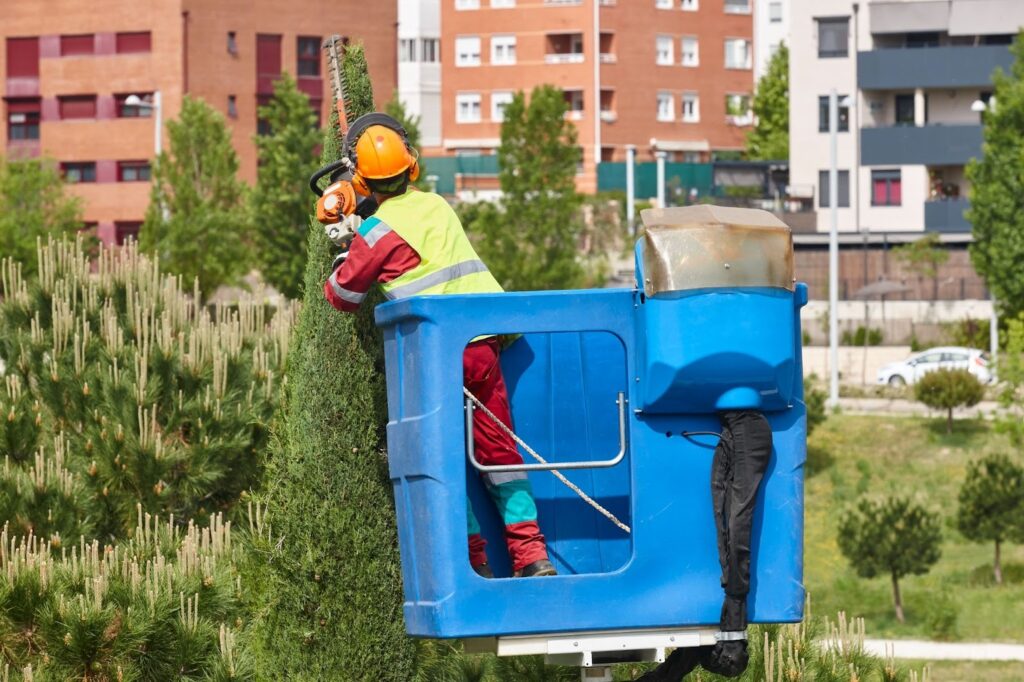
Tree maintenance introduces height challenges and unpredictable terrain conditions. Bucket trucks reduce climbing hazards while improving worker positioning. Crews operate safely near buildings, vehicles, and power lines. This controlled access supports responsible environmental care.
Tree Trimming and Pruning Operations
Arborists reach high branches safely using bucket trucks, which position workers without damaging surrounding trees or landscaping. Crews make accurate cuts with improved control and visibility. Fatigue is lower than with manual climbing methods. Properties experience minimal disturbance during service. Tree health improves through precise pruning techniques.
Storm Cleanup and Emergency Tree Removal
Storm damage creates unstable and hazardous overhead conditions. Bucket trucks allow safe removal of broken limbs and hanging debris. Crews work above-ground hazards without entering unsafe zones. Access near power lines improves response speed. Emergency operations progress more efficiently. Communities recover faster through controlled cleanup efforts.
Specialized Bucket Truck Applications
Some industries rely on bucket trucks for highly specialized tasks. Their flexibility supports technical, creative, and inspection-related work. Temporary elevated access remains valuable in controlled environments. These applications demonstrate operational versatility.
Film Production and Event Setup Support
Production crews use bucket trucks to position overhead lighting and equipment. Cameras mount securely at elevated angles. Event teams rely on temporary rigging for stages and displays. Equipment moves efficiently between setups without permanent structures. Safety improves during installation and teardown. Creative projects gain adaptable access solutions.
Industrial Inspection and Surveying Tasks
Engineers inspect bridges, tanks, and industrial structures using bucket trucks. Close visual access improves assessment accuracy. Surveyors collect measurements without installing fixed platforms. Operations continue during inspections with minimal disruption. Facilities maintain productivity throughout evaluations. Maintenance decisions rely on precise, firsthand observations.
Safety Practices That Guide Bucket Truck Use
Working at height requires disciplined safety practices. Bucket trucks include features that support responsibility. Training reinforces proper operation. These standards protect workers and the public.
Operator Training and Certification Standards
Operator training establishes the foundation for safe bucket truck use. Workers complete formal instruction before operating equipment. Certification programs reinforce mechanical understanding and awareness of control. Hands-on practice builds confidence during elevated tasks. Crews assess jobsite risks before lifting begins. Consistent training improves safety performance across teams.
Built-In Safety Features and Daily Checks
Built-in safety features support controlled bucket truck operation, including guardrails and harness points that secure workers at height. Outriggers lock into place before elevation begins. Warning systems alert operators to unsafe angles or loads. Daily inspections identify mechanical concerns early. These checks support reliable performance throughout the workday.
Jobsite Risk Awareness and Compliance Practices
Jobsite risk awareness guides the safe operation of bucket trucks. Crews evaluate terrain, weather, and overhead obstacles before setup. This preparation reduces instability during lifting. Compliance with safety regulations shapes daily decisions. Supervisors monitor procedures during operation. Awareness strengthens overall job-site control.
Choosing the Right Bucket Truck for the Job
Not every task requires the same truck. Selecting appropriate equipment improves results. Height, reach, and capacity matter. Proper matching supports safe operation.
Height, Reach, and Load Capacity Factors
Height, reach, and load capacity determine a bucket truck’s suitability. Boom length defines the maximum working elevation. Horizontal reach affects access around obstacles. The load limits control tools and material weight. Crews plan tasks within manufacturer specifications. Proper planning reduces mechanical strain.
Bucket Truck Types and Design Options
Bucket truck designs vary based on job requirements. Articulated booms maneuver around structures easily. Telescopic booms extend vertically for direct access. Insulated models support electrical work safely. Compact trucks are ideal for narrow or congested areas. Design choice aligns equipment with task demands.
Matching Equipment to Terrain and Work Conditions
Terrain conditions influence bucket truck performance. Uneven ground requires advanced stabilization systems. Urban environments demand compact, maneuverable designs. Weather affects traction and setup stability. Crews consider traffic flow and workspace limitations. Proper matching prevents operational disruption.
Use a Bucket Truck to Improve Elevated Workflows
A bucket truck supports consistent, controlled access where elevated work affects safety and productivity. Crews that rely on the right equipment complete tasks with fewer interruptions and clearer oversight. This approach reduces unnecessary risk while maintaining steady progress across demanding environments. When elevated access becomes routine, choosing dependable solutions sets the standard for how work gets done.
Explore more practical insights on elevated work, safety, and tree care by visiting the EML Tree Services blog.